
How to Start a Food Tour Business: A Real Founder's Guide
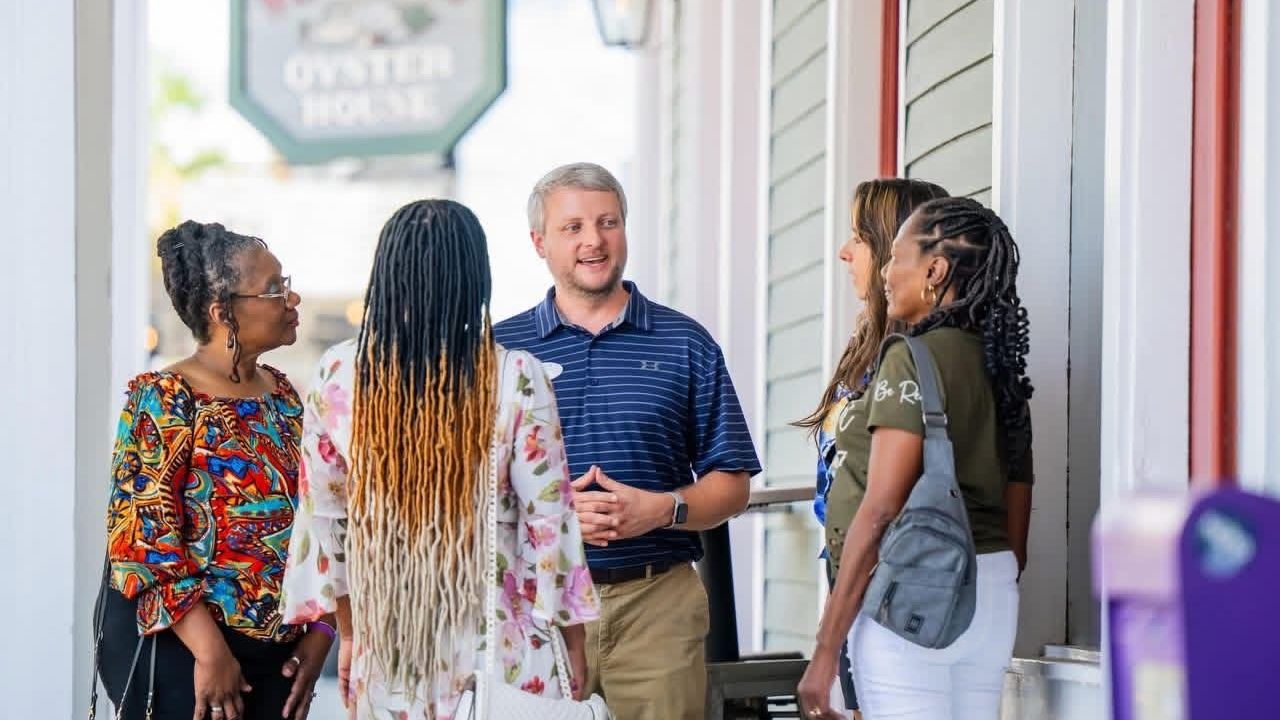
What I learned going from a steel mill night shift to one of the most recognized food tours in the South, and what I'd tell you if we were sitting across the table.
I want to tell you how this really starts, because most of what you'll read about starting a food tour business is written by people who have never actually run one. They'll give you a tidy checklist and a list of platforms and send you on your way. I'm going to give you that too, the real steps, in order, but I'm going to tell you the truth around them. Because the steps were never the hard part. The hard part was deciding I was the kind of person who could do this at all.
So let me take you back to where mine began.
It started at a steel mill
For years I worked at a steel mill just north of Mobile, Alabama. Night shifts, hard work, back-breaking some days. And here's the part people don't expect me to say: I was happy there. It was a good-paying job. It was the kind of job you could do for thirty years and raise a family on and live a solid middle-class life in south Alabama. I had no grand plan to leave it.
But there was always this other thing about me. I was the guy the other men at the mill came to for restaurant advice. Where should I take my wife for our anniversary? Where's a good spot for a date night? They asked me because I paid attention to that stuff. I'd always been a history buff growing up, and as an adult that turned into weekend adventures. On my days off I'd load up my kids, who were little enough that they didn't have opinions yet about where we went, and we'd go explore historic sites all over the region. Those trips kept leading me to small, locally owned restaurants, and I kept finding out the stories behind these places. Who started them. Why. What made them matter.
Meanwhile, downtown Mobile was waking up. The downtown you see now, full of locally owned restaurants doing fresh-caught seafood and locally sourced vegetables, has not always been the case. For a long time it was boarded up and quiet. I was watching it come back to life in real time, one restaurant at a time.
The lightbulb moment came over a card game. My wife and I were at a friend's house one night, and our friend started talking about a food tour she'd taken in Savannah, Georgia. The restaurants. The guide who walked them through the historic squares. The unique dishes she'd never have found on her own. I couldn't stop thinking about it. I sat there and thought, we have to have this in Mobile.
I became slightly obsessed with the idea. That obsession is usually the first real sign you're onto something.
I didn't wing it, and you shouldn't either
Here's where a lot of people would tell you they just figured it out on their own. I didn't. I went looking for someone who had already done it. I found an operator up in Chicago who had built a food tour company starting back in 2006 and scaled it into a multimillion-dollar business. He ran a coaching program for aspiring operators, and in 2017 I flew up there and went through it in person.
It was three days. Two of them spent with him and a small group of people from all over who wanted to do the same thing I did. We took his actual tour and gave him feedback. He told us why each piece worked the way it did. Why you start strong with great food fast. How you weave stories through the whole experience so it never feels like just eating. It was one of the best things I ever did, and it gave me the tools to come home and actually get the ball rolling.
I tell you this for a reason. I am not someone who stumbled into this and got lucky. I invested in learning it from someone ahead of me, and it shortened my path by years. That's the entire reason I eventually built my own course. I know exactly what it's worth to have a map instead of guessing, because I paid for one.
From idea to first ticket in about five months
I made the decision to go in June of 2017. By October I was giving my friends and family tour, the practice run you do before you ever charge a dime. In November I launched, and I was selling tickets the moment the website went live.
In those few months, I was doing all the back-end work at the same time. I formed an LLC. I got the business set up and got my licenses in order. I researched the stories. I talked to restaurants. I wrote a script. I started social media. I figured out early marketing. And I want to be honest about something, because nobody warned me about it: I had zero experience in almost all of those areas.
I just wanted to give some tours in my free time. I didn't realize how many different jobs come bundled inside that one idea. All of a sudden I was writing blogs, making social media content, learning email marketing, going to networking events. These were areas I had no background in at all. If you're sitting there feeling unqualified for all the pieces, good. That means you understand the job. You'll learn them the same way I did, one at a time, by doing them badly at first and then less badly.
You don't need a huge loan. You don't need investors. You can save a few thousand dollars and get going in a few months.
I financed mine with a line of credit on my home. I'm not telling you to do exactly that. I'm telling you the barrier to entry here is shockingly low compared to almost any other business you could start. And here's the part that still amazes me: you can be profitable in your very first month. What other business can say that? You're not buying inventory. You're not building out a storefront. You're not waiting two years to break even. You sell tickets, you run the tour, you pay your restaurants, and what's left is yours.
The thing nobody tells you: the scary part isn't the paperwork
Let me be straight with you about what's actually hard, because it isn't the LLC and it isn't the licenses. You can Google all of that. The hard part is putting yourself out there.
When I was up in Chicago, we had homework. Write a tour script. Then come back and deliver it out loud in front of the whole group. You do not realize how hard that is until you're standing in front of a room of people who are all looking back at you, waiting. It is intimidating to tell stories in front of people if you've never done it before. And that's just a practice room. Now imagine it's paying guests.
Then there's the restaurants. Walking into a busy restaurant, having a meal, asking to speak to the manager or the owner, and then telling them about this food tour idea you have. The fear of rejection is so real and so strong that it will mess with your head. It stops more people than any licensing form ever will.
Most people never start because of the fear of getting yourself out there. It's scary to announce to the world that you're doing something, and then actually do it.
I hear the same lines over and over from people who have the idea but never move. I'll do it when I'm not so busy. When the kids are a little older. When I retire, I'll transition into it. I'm not sure it'll make enough money. These aren't bad people or lazy people. They're visionary people who never execute. And the only real difference between them and the people running successful tours is that the second group was willing to be seen starting before they felt ready.
The first yes that changed everything
I want to tell you about the first restaurant that said yes, because it's the moment the whole thing became real for me.
The restaurant was Von's Bistro. Von is a local cook whose family immigrated to the Gulf Coast from Laos back in the 1970s. She grew up in the food and seafood world, and she'd always been deeply supportive of local businesses and of the downtown comeback. I'd heard her in interviews. I knew how warm she was. I had a feeling she'd say yes.
So I did exactly what I'd been taught, and exactly what I teach now. I went in for a meal with my sister and brother-in-law. I went during the off-peak hours, not in the middle of a rush. I enjoyed the food. And then I asked to speak to Von.
She came over, and I was so nervous. But I told her about the interview I'd heard her in. I told her how much I appreciated what she does for the community. And then I told her about my idea for a food tour. She didn't hesitate. She said she'd happily be a part of it and would love to help any way she could. She wrote her phone number on a restaurant ticket and told me to call her.
I called. We set up a real meeting the next week, where I walked her through the logistics and got the backstory I'd use to tell her story on the tour. And that one yes gave me the confidence to walk into the next restaurant, and the next. It snowballed. Before long I had enough wonderful local restaurants to build an actual food tour.
Your city is not too small. I promise.
This is the fear I hear more than any other. My city isn't New Orleans. We don't really have a food scene. There's nothing special here. I want to stop you right there, because I've heard it from people in towns of every size, and they are almost always wrong.
Every city has a food story. Most of them just haven't had anyone willing to tell it yet. And here's something I'd bet money on about your town: somewhere in it is a restaurant that's gotten some national attention. A chef who trained somewhere impressive. A spot that got featured on a food show. A write-up in a regional magazine. A James Beard nod nobody talks about anymore. Once you start sitting down with these owners and hearing their stories, you'll catch yourself thinking, how has this story not already been told?
You don't need fifty great restaurants. A food tour is usually four to six stops. You need a handful of good ones and the stories that connect them. That's it.
The lesson that doubled my business: build for locals
Here's one of the biggest mistakes I made early, and I want to save you from it. When I started, I assumed my customers would be tourists. People flying into Mobile from all over the country who needed something to do. And sure, that happens to a small degree. But it was never my base.
My base was locals. People who live right here. They're the ones who kept coming back, kept sharing, kept bringing their friends. That early local momentum is still carrying us nine years later. Our locals are the reason we're still in business.
Once I understood that, it changed how I built everything. The biggest payoff was themed tours. Haunted tours. Mardi Gras tours. Christmas tours. Brunch tours. Father's Day tours. Locals buy roughly ninety-five percent of those tickets. A tourist takes one tour once. A local takes your Christmas tour this year, your Mardi Gras tour in the spring, and brings a different friend each time. Building for the people who actually live in your city is the difference between a one-time novelty and a business that compounds.
A tourist is a single sale. A local is a relationship that buys from you for years.
What it actually costs, and how the money works
People always want a dollar figure here, and I'm deliberately not going to give you one, because it would be misleading. I've coached students in markets where a tour ticket is a fraction of what it is in a high-cost area like coastal California. If I told you my Mobile numbers, I'd either be overselling someone in a smaller market or underselling someone in a bigger one. The actual dollars fluctuate enormously by where you live.
What does not change is the math underneath. This is the framework I want you to build around no matter what your market looks like:
- Food costs: about 40 percent of your ticket price. This is what you pay your restaurant partners per guest.
- Overhead: about 10 percent. Insurance, booking platform fees, marketing, the small stuff.
- Profit: about 50 percent. That's your goal, and it's a genuinely strong margin for any business.
Whatever your ticket price ends up being in your market, aim for those proportions. If your food costs are creeping well past 40 percent, your pricing is off and you need to fix it. Get the percentages right and the business works at almost any price point, in almost any town.
You don't have to quit your job to start
I think this is the most important thing I can tell the person who has a stable job and a family and a mortgage, which describes a lot of you. I did not quit the steel mill when I started Bienville Bites. I didn't quit it for about five years.
I built this thing on the side, on my days off, in the margins of a full-time job. I had no intention of leaving that job. What changed was that after we came through COVID and rebounded, the freedom of owning something of my own, and the chance to grow it into something special, became an opportunity I couldn't pass up. By then it had earned the leap. It had proven itself.
So don't let the all-or-nothing version of this stop you. You don't have to bet your family's security on a dream you haven't tested. You can start it the way I did, alongside your real life, prove that it works, and only step away from the steady paycheck once the tour has shown you it deserves that trust.
So how do you actually start? Here's the order.
Underneath the story, here's the real sequence. None of these steps is hard on its own. The work is doing them in order and not letting the fear in the middle stop you.
- Start with your why. Before anything else, get clear on why you want to do this and what makes your city worth touring. This is the foundation everything else sits on.
- Define who it's for. And here's your shortcut: build for your locals first, not just tourists. It can help your early days of marketing, then your tourists will follow.
- Name it and claim it. Pick a name that reflects your city or your niche, is easy to spell, and is available as a domain and social handle.
- Set up the business correctly. Form your LLC, get your EIN, sort out local licenses and permits, and get general liability insurance. Talk to a CPA and an attorney. This is what separates a hobby from a real business, and it gives you credibility with restaurants.
- Get your first restaurant yes. Start with your easiest one. Go in as a guest first, during off-peak hours, and make the ask. Let that first yes snowball into the rest.
- Build the route and the stories. Four to six stops. Walk it on foot. Write a story for each stop with a hook, a little tension, and a takeaway.
- Run a friends and family tour. Practice on people you trust before you ever charge. Get honest feedback. Fix what's clunky.
- Launch and sell tickets. Get your booking platform live, tell your community, and start selling. You're a food tour operator the moment that first ticket sells.
Does the fear ever go away?
Honestly? It fades, but not entirely. Pitching a new tour or standing in front of a new group is still a little nerve-racking even now. The difference is that these days everyone in Mobile knows Bienville Bites, and they know me. New restaurants come to me now and ask to be on the tour. The fear didn't vanish. I just kept moving with it until it got quieter, and the reputation I built in the meantime did the rest.
That's the truth I'd leave you with. You will not feel ready. You'll feel nervous walking into that first restaurant and you'll feel exposed announcing your tour to the world. Everybody does. The people who end up running successful food tours are not the ones who felt no fear. They're the ones who did it scared.
One Saturday. Ten guests. A nervous guy walking the streets of Mobile, hoping the gumbo would be ready on time. That's all it took. One step.
If you've read this far, this idea has a hold on you for a reason. The only thing left is to start before you feel ready, because you never will, and ready was never the requirement. Showing up was.
Ready to turn the passion of your city into a food tour business? Our step-by-step course provides all the tools and insights you need to launch and run a successful food tour from the ground up.
